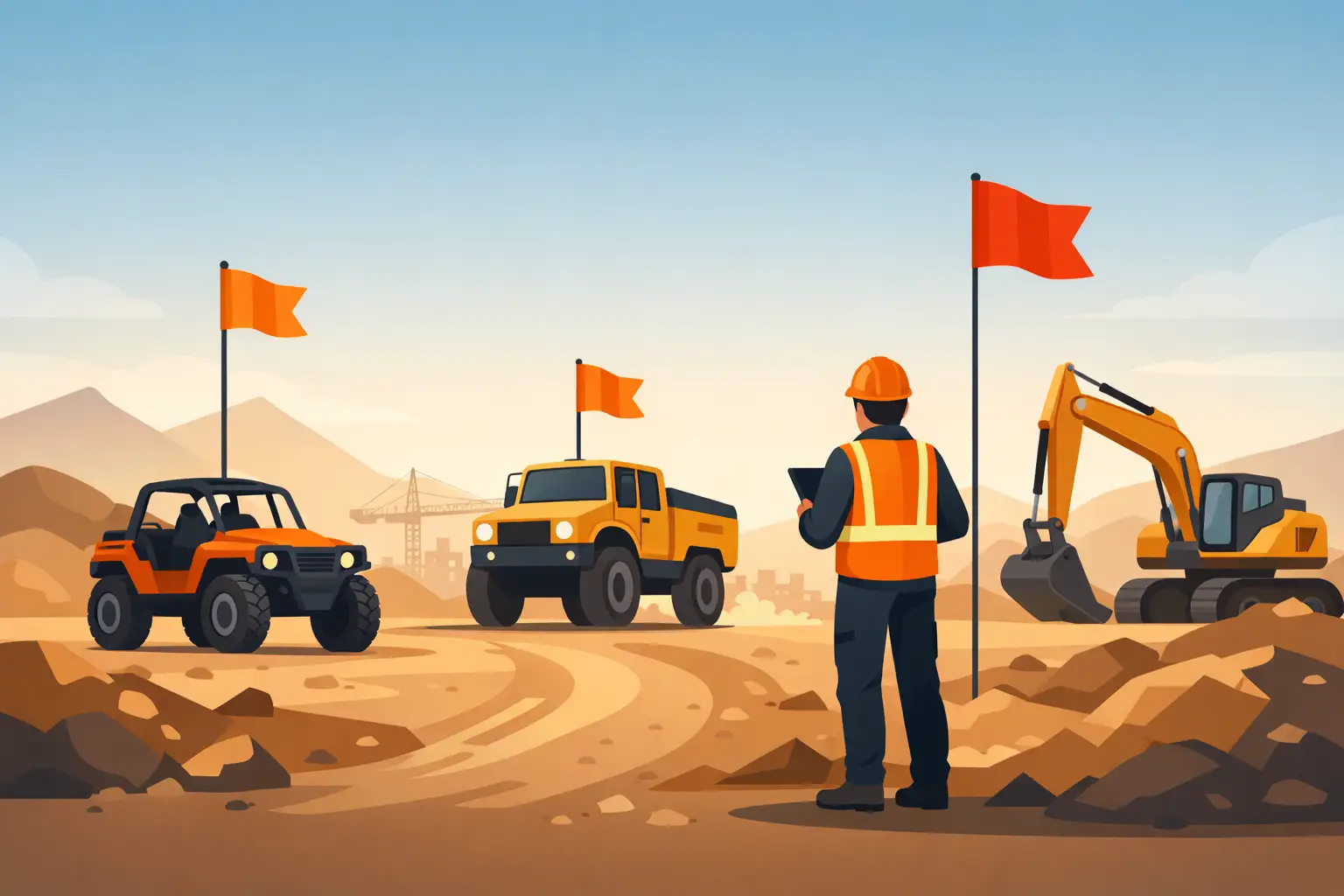
A vehicle disappearing behind a ridge, stockpile or row of trailers is a real risk on busy off-road sites. Off road visibility flags give other drivers, marshals and pedestrians an earlier warning that a vehicle is approaching, especially where the ground is uneven and sightlines change quickly. They are a simple addition, but choosing the right height, colour and fixing method makes a practical difference.
For construction compounds, private land, motorsport areas, agricultural tracks and outdoor events, the aim is straightforward: make moving vehicles easier to spot before they enter someone else’s path. A flag is not a substitute for careful driving, site controls, lighting or a trained marshal. It is an extra visual cue that supports a safer, more organised operation.
Where visibility flags make sense
Visibility flags are most useful where vehicles regularly operate below the natural line of sight. This includes quarries, off-road courses, farms, landfill sites, festival fields, loading areas and temporary event grounds. A quad, buggy, utility vehicle or small plant vehicle can be hidden by a bank or mound long before its driver can see approaching traffic.
They also work well where several teams share a site. Event crews, security staff, catering vehicles, contractors and delivery drivers may all be moving to different schedules. A clearly visible flag helps people recognise a vehicle’s position at a glance, without relying only on engine noise or a last-second sighting.
The need depends on the site. A flat, well-lit yard with controlled routes may need more signage and traffic management than tall vehicle flags. On a rough site with blind crests and mixed vehicle sizes, flags can be a sensible low-cost part of the safety plan.
Choosing off road visibility flags by height
Height is the first decision. A short flag may look tidy but offers little benefit once the vehicle drops into a rut or passes behind parked equipment. The flag needs to sit high enough to be seen above the obstacles that are common on your site.
For smaller off-road vehicles, a flexible pole of around 1.5 to 2 metres above the mounting point is often a useful starting point. Taller poles can improve visibility on dune-style terrain, deep ruts or sites with high stockpiles. However, more height also means more movement in wind and a greater chance of catching low branches, gates, roof structures or transport covers.
Before ordering, measure from the intended fixing point rather than from ground level. A pole mounted on a roof rack, roll cage or rear bed starts higher than one fitted to a bumper. Check the total height against the places the vehicle will travel, including workshop doors, trailers, storage bays and access barriers.
A flexible fibreglass pole is usually the practical choice for off-road use. It bends when it strikes vegetation or moves over rough ground, then returns to shape. A rigid pole may be appropriate for a controlled display area, but it is less forgiving on active terrain.
Pick colours that stand out in real conditions
Bright fluorescent colours are popular for good reason. Fluorescent orange, yellow and lime green tend to stand out against soil, grass, stone and grey skies. The best choice still depends on the surroundings. Yellow can be lost against dry grass or sand, while orange may blend into some clay ground and autumn foliage.
For many sites, a solid fluorescent flag with a contrasting black graphic, border or vehicle number is easier to identify than a complicated full-colour design. If flags are being used to distinguish teams, routes or vehicle classes, keep the system simple. One clear colour per group is easier to recognise at speed than several shades and detailed logos.
Reflective elements can help when vehicles operate in poor light, but they only work when light hits them. If activity continues at dawn, dusk or after dark, proper vehicle lights, site lighting and high-visibility procedures remain essential. A printed flag should support those measures, not replace them.
Printed flags for work sites and events
A plain safety flag does the job where visibility is the only priority. A custom printed version can do more when vehicles are part of an organised event, branded activation or managed fleet. Add a company name, event logo, vehicle number or simple instruction such as “Marshal” or “Medical” to make each vehicle easier to identify.
Keep print practical. Fine text will not be readable from across a field, and a logo with too many small details can turn into visual noise once the flag is moving. Large lettering, strong contrast and uncomplicated artwork give the best result. If the flag is double-sided, make sure the design reads correctly from both directions rather than appearing reversed on one side.
For event organisers, numbered flags can simplify vehicle control. A marshal can identify a missing or incorrectly parked vehicle more quickly, while attendees can see which vehicles belong to approved suppliers or crew. On a promotional off-road display, branded flags also help create a more professional, coordinated look without adding bulky signage to every vehicle.
G1 Printing can help businesses and organisers produce clear, event-ready printed flags when time, budget and practical visibility all matter.
Get the mounting right
The strongest print is no use if the flag is fitted where it cannot be seen or where it quickly fails. Choose a mounting point that is secure, high and clear of moving parts. Roll cages, rear frames, roof racks and purpose-built mounts are common options, depending on the vehicle.
Avoid placing the pole where it blocks a driver’s view, interferes with doors or tailgates, or sits close to hot exhaust components. Check that it cannot snag a passenger, load, trailer coupling or moving machinery. A quick fitting may save time at the start of the day, but a loose mount can become a hazard on rough ground.
The pole should have enough flex to cope with vibration and branches, but the base must remain firm. Use a mount designed for the pole diameter and vehicle type. Regularly inspect clamps, brackets and fixings, particularly after hard use, wet weather or transport on a trailer.
Material, print and weather resistance
Outdoor flags need to handle wind, dirt, rain and repeated movement. Lightweight polyester is widely used because it flies well and dries quickly. The right weight is a balance: very light material moves easily in still conditions, while a heavier fabric may wear better and look more substantial. In exposed locations, excessive wind is the deciding factor, so a shorter pole or smaller flag may be safer and more durable.
Colour fading is another practical consideration. Bright prints will naturally age faster when used every day in strong sunlight. For occasional events, this may not matter. For a fleet working year-round, it is worth keeping spare flags available so worn or damaged units can be replaced promptly.
Ask for a hemmed finish and reinforced fixing points where the flag will be used regularly. The stress is usually concentrated at the top sleeve, eyelets or attachment tabs. Better finishing in these areas helps a flag last longer than a lightweight promotional item designed for a single indoor display.
Build flags into the site plan
Off road visibility flags work best when everyone understands what they mean. If a red flag identifies a recovery vehicle, for example, drivers and marshals need to know that before work begins. If colours are purely decorative, avoid using combinations that could be confused with a safety instruction already used on site.
Include flags in the vehicle check before the day starts. Confirm that the pole is fitted, the fabric is visible, the mount is secure and the flag is not torn or wrapped around the pole. This takes moments and is particularly worthwhile before an event opens or vehicles enter an unfamiliar area.
It is also worth reviewing the route itself. Flags can improve awareness at blind crests, but they cannot fix a badly planned traffic flow. Separate pedestrians from vehicles where possible, mark routes clearly, use speed controls and provide marshals at pinch points. The flag is one useful layer in a wider system.
Order for the conditions, not just the appearance
When comparing off road visibility flags, start with the terrain, vehicle and operating hours. Then choose a pole height, flag size and colour that remain visible in those conditions. A large branded flag may suit a showground or sponsored event; a compact fluorescent flag may be the better choice for a utility vehicle travelling under trees and through tight access points.
Clear artwork, dependable materials and secure fitting are what turn a flag from a decorative extra into a practical site tool. If your vehicles are expected on rough ground, plan for the moments when they cannot be seen easily. That is when a well-positioned flag earns its place.