A custom whip flags review only has value if it answers the questions buyers face before an event, promotion or off-road outing: will the flag be visible, will the print look right, and will it stand up to the conditions? These are not decorative extras. A well-produced whip flag can identify a vehicle, reinforce a team or sponsor message, and make a busy site easier to navigate. A poorly chosen one can fade into the background, flap awkwardly or arrive too late to be useful.
For UK businesses, event teams and clubs, the right choice comes down to intended use. A flag for a static promotional display has different demands from one fitted to a buggy, 4×4, recovery vehicle or safety pole. Start with the job it needs to do, then assess the material, pole fitting, artwork and turnaround time.
What custom whip flags are good at
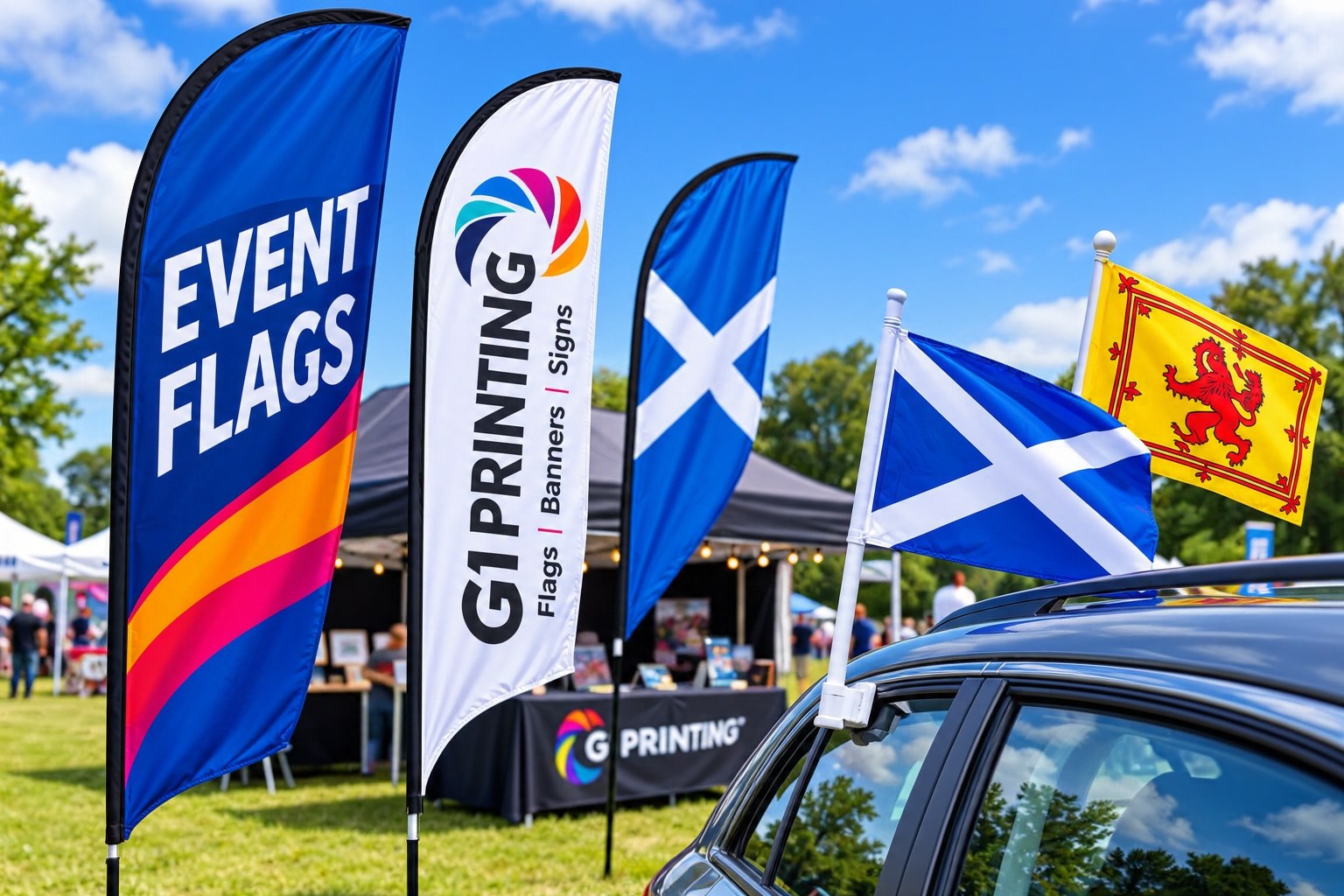
Whip flags are long, narrow flags designed to sit high above a vehicle or display point on a flexible pole. Their height gives them a practical advantage where ground-level branding gets blocked by crowds, tents, other vehicles or uneven terrain. At motorsport events, outdoor shows, campsites and large vehicle gatherings, that visibility can be the difference between being noticed and being missed.
They also work well when you need a design that is easy to recognise at a glance. A strong logo, high-contrast number, simple message or bold colour field reads more effectively than a dense advert. This makes whip flags particularly useful for marshals, clubs, trade teams and promotional crews trying to create a consistent presence across a site.
That said, they are not a replacement for every display product. If customers need to read detailed pricing, a web address or a long service list, a roller banner, PVC banner or sign board will usually do the job better. A whip flag is a visibility tool first. Treat it as the high-impact marker that leads people towards the rest of your display.
Custom Whip Flags Review: print and material quality
The fabric and printing method have more influence on results than many buyers expect. Outdoor flags need to move freely while remaining legible, so lightweight polyester is commonly the sensible option. It catches the wind, is easy to transport and suits full-colour graphics. However, thinner fabric can show some image visibility from the reverse side, particularly with dark graphics. This is normal for many single-sided printed flags, not automatically a print fault.
For branding that must read properly from both directions, ask how the flag will be produced. Some flags use a print-through process, where the reverse shows a mirrored version of the design. Others are made as double-sided products with separate printed panels. Double-sided construction can improve readability but adds weight, cost and potentially more wind resistance. The best option depends on whether people will mainly view the flag from one approach or from all around.
Colour matters just as much. Bright blocks of colour, white lettering on a dark background and simple shapes generally perform well outdoors. Fine gradients, pale text and small photographic detail can look impressive on screen but lose definition when the flag is moving. Supply artwork at the requested size and resolution, and allow enough clear space around key logos or text. A good proof should show the final flag proportions, not simply a flat rectangle of your original artwork.
Finishing deserves a close look too. Reinforced stitching around the sleeve and edges helps where the flag meets the pole and where repeated movement puts pressure on the fabric. For flags used regularly in wind or on moving vehicles, this is a practical requirement rather than a premium extra. Check the sleeve width, pole connection and whether the flag has been designed for your particular whip or mounting system.
Visibility is a design decision, not a size decision
A taller flag is usually easier to spot, but bigger is not always better. Height affects storage, handling, stability and suitability for the venue. A vehicle entering a covered car park, travelling beneath low branches or being transported on a trailer may need a shorter or removable setup. Event organisers may also set maximum heights, placement rules or safety requirements.
The most effective designs use hierarchy. Put the main identifier at the top or in the central area that remains visible when the fabric curls. Use one clear focal point, then keep secondary information limited. If the flag is for a trade stand, a recognisable logo and brand colour may be enough. If it identifies a vehicle at an organised activity, a bold number or role label such as “Marshal” can be more useful than a full company message.
Before approving artwork, view it from a distance. If the essential message cannot be understood in a few seconds from several metres away, simplify it. That small check prevents one of the most common custom flag mistakes: trying to fit a leaflet onto a moving piece of fabric.
Choosing the right flag for the environment
A fair custom whip flags review needs to consider where the product will be used. Outdoor conditions put pressure on every part of the flag, from ink and fabric to stitching and hardware. Wind strength, rain, dust, mud and vehicle speed all change what is appropriate.
For a one-day promotional event, a lightweight printed flag with straightforward branding can be a cost-effective choice. It is portable, quick to install and gives a stand or vehicle extra height. For regular off-road or motorsport use, durability should take priority over the lowest upfront price. A reinforced sleeve, reliable pole compatibility and an uncomplicated graphic that stays readable after repeated use are worth paying attention to.
There is also a safety distinction to make. A branded whip flag may help visibility, but it should not be assumed to meet the requirements for a safety marker at a particular venue, trail or organised event. Check the organiser’s rules on height, colour, lighting, mounting and permitted flag styles before ordering. If a flag will be used on a road-going vehicle, check the applicable legal and insurance requirements as well. The right print cannot compensate for an unsuitable mounting position or an insecure fitting.
Turnaround, proofing and value for money
Fast print is valuable when an exhibition date, club meet or campaign launch is already fixed. But an urgent order still needs a proper approval stage. The clearest ordering process is one that confirms final size, finishing, print side, pole sleeve position, quantity and delivery date before production begins. These details avoid expensive last-minute surprises.
Budget should be judged over the expected life of the flag. The cheapest option can make sense for a single promotion, a trial design or a short campaign. For repeat events, spend slightly more on durable finishing and artwork that can be reused across flags, banners and posters. Consistent branding saves time each time the next event comes around.
For businesses already ordering event print, coordinate colours and logo versions across the full display. Your whip flags should look like part of the same campaign as your roller banners, flyers and backdrops. G1 Printing works with deadline-driven UK customers every day, so the practical lesson is simple: approve the artwork early, keep the message clear and order the pieces that work together.
Common buying mistakes to avoid
The first mistake is assuming every flag fits every pole. Measure or confirm the pole diameter and flag sleeve requirement before artwork goes to print. The second is choosing a complicated design because it looks good at close range. Whip flags are seen in motion and at distance, so clarity wins.
Another problem is overlooking packing and transport. Consider where the poles, flags and mounting hardware will be stored between events. A team that can pack, label and reinstall its display quickly is less likely to lose parts or arrive with a damaged flag. Finally, do not leave delivery until the final possible day. A little contingency is cheaper than rebuilding an event display at the last minute.
The best custom whip flag is one that is easy to recognise, correctly fitted and ready when your event begins. Choose the specification around the real environment, not just the artwork on screen, and your flag will earn its place in the kit.