A banner can be one of the lowest-cost ways to put your message in front of passing customers, event guests or trade show visitors. But when asking how much do banners cost, the useful answer is not one fixed figure. A small PVC banner for a weekend offer costs very differently from a freestanding roller banner or a branded backdrop built for photographs.
For most UK business orders, banner pricing starts at a budget-friendly level for basic PVC signage and rises with size, material, hardware, finishing and deadline. The best value comes from choosing a banner that suits where it will be used, rather than paying for features you do not need.
How much do banners cost in the UK?
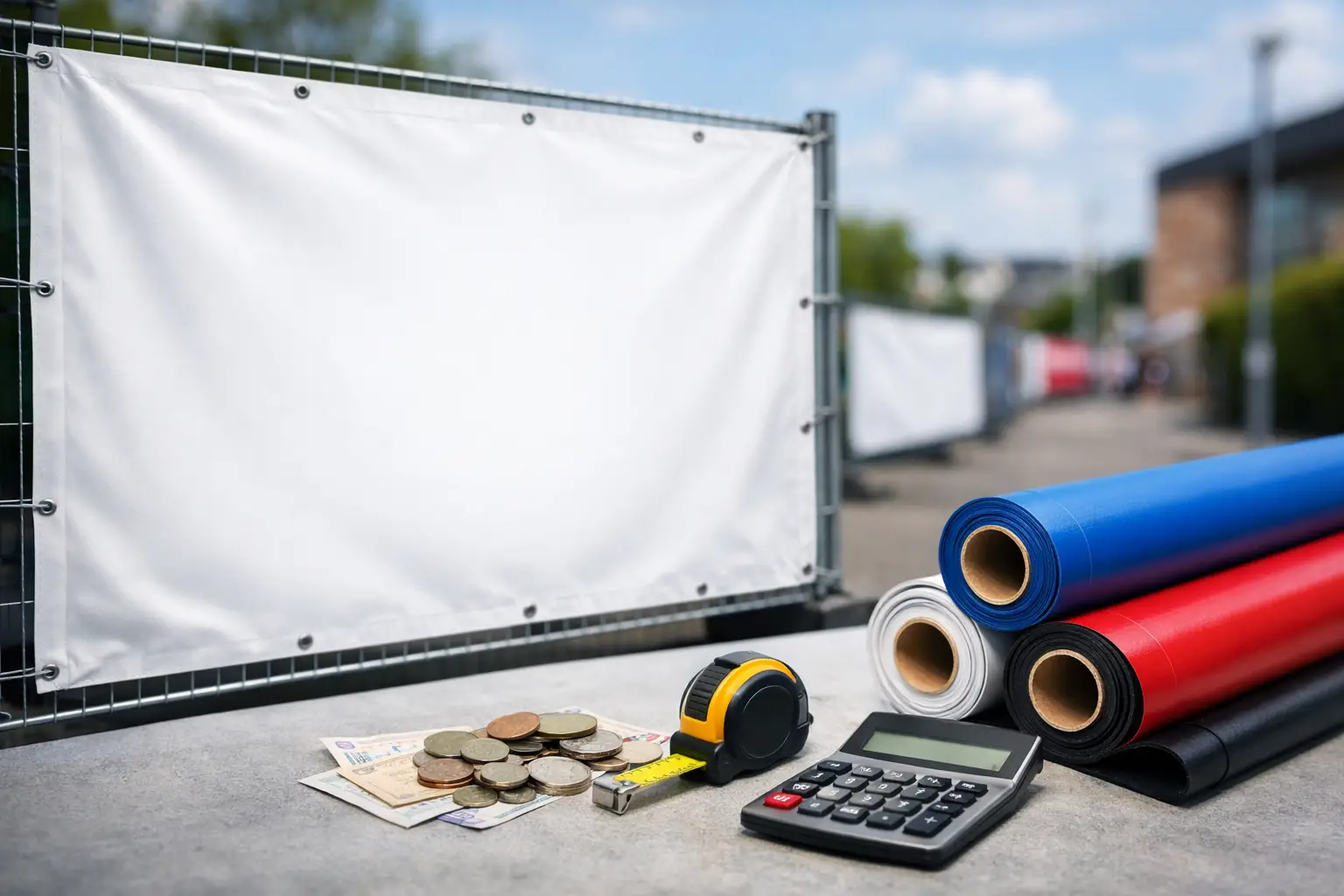
As a practical guide, a small printed PVC banner may cost from around £15 to £30, depending on dimensions and finishing. Larger PVC banners for shop fronts, fences and outdoor promotions commonly fall between £30 and £100 or more.
A standard pull-up roller banner usually starts from around £40 to £80 for a budget cassette system with a printed graphic. Premium roller banners, wider display units and stronger hardware can cost £100 to £250 or more. Step-and-repeat backdrops and larger event display systems are generally priced higher because they require more material, a frame or stand, and careful finishing.
These figures are useful for planning, but the final price depends on the specification. If you need same-day production, a larger format, bespoke sizing or delivery for a fixed event date, request a quote based on the exact job rather than relying on a headline starting price.
What affects banner prices?
The printed graphic is only one part of the cost. Banner production includes the chosen material, print coverage, cutting, hems, eyelets, poles or cassette hardware, packaging and delivery. A low entry price may be ideal for a straightforward promotion, while a higher-spec option can be better value if you will use it repeatedly.
Banner size
Size is usually the clearest price driver. More square metres means more printable material, ink and finishing time. A compact banner for a market stall or reception desk is inexpensive compared with a large outdoor banner spanning a railing, building frontage or event entrance.
Before ordering, measure the space rather than estimating it. This avoids paying for an oversized banner that is awkward to fit, or ordering a smaller one that disappears at viewing distance. For outdoor banners, also allow room for eyelets, fixing points and safe tensioning.
Material and intended use
PVC is a popular choice for outdoor and short-term promotional banners. It is durable, practical and cost-effective for sales messages, construction signage, events and shop-front displays. Mesh banner material is often a better choice for windy locations because its perforated surface allows some air to pass through. It may cost more, but it can reduce strain on the banner and fixings.
For indoor exhibitions and business presentations, roller banners offer a more polished, portable format. The printed panel retracts into a base cassette and normally comes with a carry case, making it quick to transport and set up. You are paying not only for the print but also for reusable display hardware.
Fabric backdrops and premium display graphics can create a more refined finish for launches, conferences and photo opportunities. They are not always necessary for a one-day promotion, but they can be worthwhile where brand presentation matters and the display will be used across several events.
Finishing and fittings
A banner with cut edges may be suitable for some indoor uses, but outdoor PVC banners usually need hems and eyelets for secure installation. Pole pockets, reinforced corners, rope, bungee cords and custom shapes can all affect the cost.
These details should not be treated as optional extras without thought. A banner is only useful if it can be installed safely and neatly. For example, a large outdoor banner needs appropriately spaced eyelets, while a stage backdrop may need pole pockets or a frame-compatible finish. Choosing the right finishing at the start prevents last-minute fitting problems on site.
Single-sided or double-sided printing
Most banners are printed on one side because they are displayed against a wall, fence, stand or backdrop frame. If people will approach from both directions, a double-sided solution may make more commercial sense. It will usually cost more due to additional material or print work, so consider whether both sides will genuinely be seen.
Turnaround and delivery
Fast printing is valuable when an event date is close, but urgent production can affect the available options and cost. Standard turnaround may be the most economical choice when you have time. Same-day or next-day production is often worth paying for when a missed promotion, exhibition or opening date would cost more than the print itself.
Delivery also needs to be part of the budget. A lightweight small banner is straightforward to send, while large formats, frames and multiple roller banner cases may require more substantial packaging. Confirm the delivery date, not only the dispatch date, if the banner is needed for a specific event.
PVC banner costs versus roller banner costs
PVC banners and roller banners solve different problems, so comparing their prices directly can be misleading.
A PVC banner is usually the cheaper option when you need maximum visual area for minimum spend. It is ideal for temporary offers, outdoor advertising, charity events, school fairs, building sites, sports clubs and directional messaging. You can order it to the size you need and fix it to a fence, wall or railings.
A roller banner costs more upfront, but it is designed for portability and repeat use. It stands independently, needs no wall or fence, and can be assembled in moments. That makes it a strong choice for networking events, showrooms, conferences, reception areas, presentations and trade show stands.
If your message changes every few weeks, several low-cost PVC banners may be the sensible route. If your company branding remains consistent and you attend events throughout the year, a roller banner can offer better long-term value. The most economical product is the one you will actually be able to use in the right location.
Event backdrops and step-and-repeat banner pricing
Branded backdrops are often priced according to width, height, material and frame type. A simple printed backdrop may be suitable for a small press wall, while a larger step-and-repeat system for sponsors, awards evenings or product launches needs a stable support structure and a graphic designed to look good in photographs.
Do not make the common mistake of choosing a backdrop based on overall room size alone. Think about camera framing. A backdrop needs enough branded area behind individuals or groups without logos being hidden at shoulder height or cut off around the edges of photographs.
For repeat events, use a design with evergreen branding rather than a date-specific message. The initial cost may be higher than a disposable sign, but the backdrop can support multiple campaigns, media opportunities and social content over time.
How to keep banner costs under control
Start with the purpose of the banner and work backwards. A short-term outdoor sale does not need the same specification as a corporate exhibition display. Keeping the design simple, choosing a standard size and supplying print-ready artwork can all help control the price.
If you need several products for one campaign, such as a roller banner, posters, flyers and business cards, plan them together. Matching colours, offers and calls to action makes the campaign look more professional, and combining production requirements can reduce the risk of inconsistent branding.
Avoid shrinking text to fit more information onto the banner. A clear headline, strong offer and visible contact detail are more effective than a crowded layout. Better design does not always mean more expensive printing, but it does mean the money spent on print has a better chance of producing results.
What to check before you place an order
Check the finished size, material, print side, fitting method and turnaround before approving your artwork. For outdoor banners, verify where it will be fixed and whether wind exposure changes the material or finishing you need. For roller banners, check the visible graphic area and whether a carry case is included.
Also inspect the artwork at full size where possible. Images that look acceptable on a phone screen can appear soft when enlarged. Keep important wording away from eyelets, hems, cassette bases and trimmed edges, and use high-resolution logos and photographs.
G1 Printing can help businesses, organisers and promotional teams choose practical banner options when time and budget are tight. Whether you need a low-cost PVC banner for a local promotion or portable displays ready for an event, the right specification keeps the order straightforward and the result presentable.
A banner should earn its place in your budget by being easy to read, suitable for its location and ready when you need it. Choose the format around the job, confirm the finish before print, and you can spend confidently without paying for features that will not help your campaign.